Buying guide
How to Choose a Metal Fabricator: Seven Questions to Ask Before You Send the PO



Choose a metal fabricator on how it answers seven questions, not on the quote total. Ask how the delivery date was built, who will build the part, how quality is checked during the build, what gets sent to other shops, whether they can engineer as well as build, whether your part fits their shop, and what a lower quote leaves out.
| A weak answer | A strong answer | |
|---|---|---|
| How did you set this date? | The earliest date on the table, with no reason given | Built from material deliveries, labor hours and what is already in the shop |
| Who will build my part? | We have welders | Certified fabricators who read the print, retested on a regular schedule |
| How do you check quality? | We look it over before it ships | Incoming material checked, each step inspected and tagged before the next |
| What will you send out? | A vague answer, or none | A plain list of what goes to another shop, and why |
| Can you engineer it? | Send us a finished print | Licensed engineers can design it, or we build your print as drawn |
| Can you handle my part? | We can do anything | Named materials, a thickness range and the largest thing the shop has built |
| Why is your quote lower? | We are just cheaper | Here is what is included, line by line, and what is not |
Three shops quote the same job. One is cheapest, one promises the earliest date, and nothing on the paper says which will deliver the right part on time. Put the same seven questions to every shop, in writing, and compare the answers instead of the totals. Here is why each one matters, and how we answer it ourselves.
1. How did you set this date?
Over-promising is the number one thing to watch for. Asked what a friend should watch for, our owner, Tom D’Angelo, put it first: a shop that gives you an unrealistic timeline and then cannot meet it.
Ask what the date was built from. Ours comes from, in Tom’s words, “what our suppliers are able to deliver to us and how quickly our people can manufacture the product, looking at hours required, also our backlog.” Then we manage the job to that date, and if it is going to move, you hear it from us early.
Picture it: a plant engineer books an installation crew and buys a welded frame from the shop with the earliest date. The date slips, the engineer finds out the day the frame was due, and the crew stands down. The date that wins the order is not always the date you get.
2. Who will actually build my part?
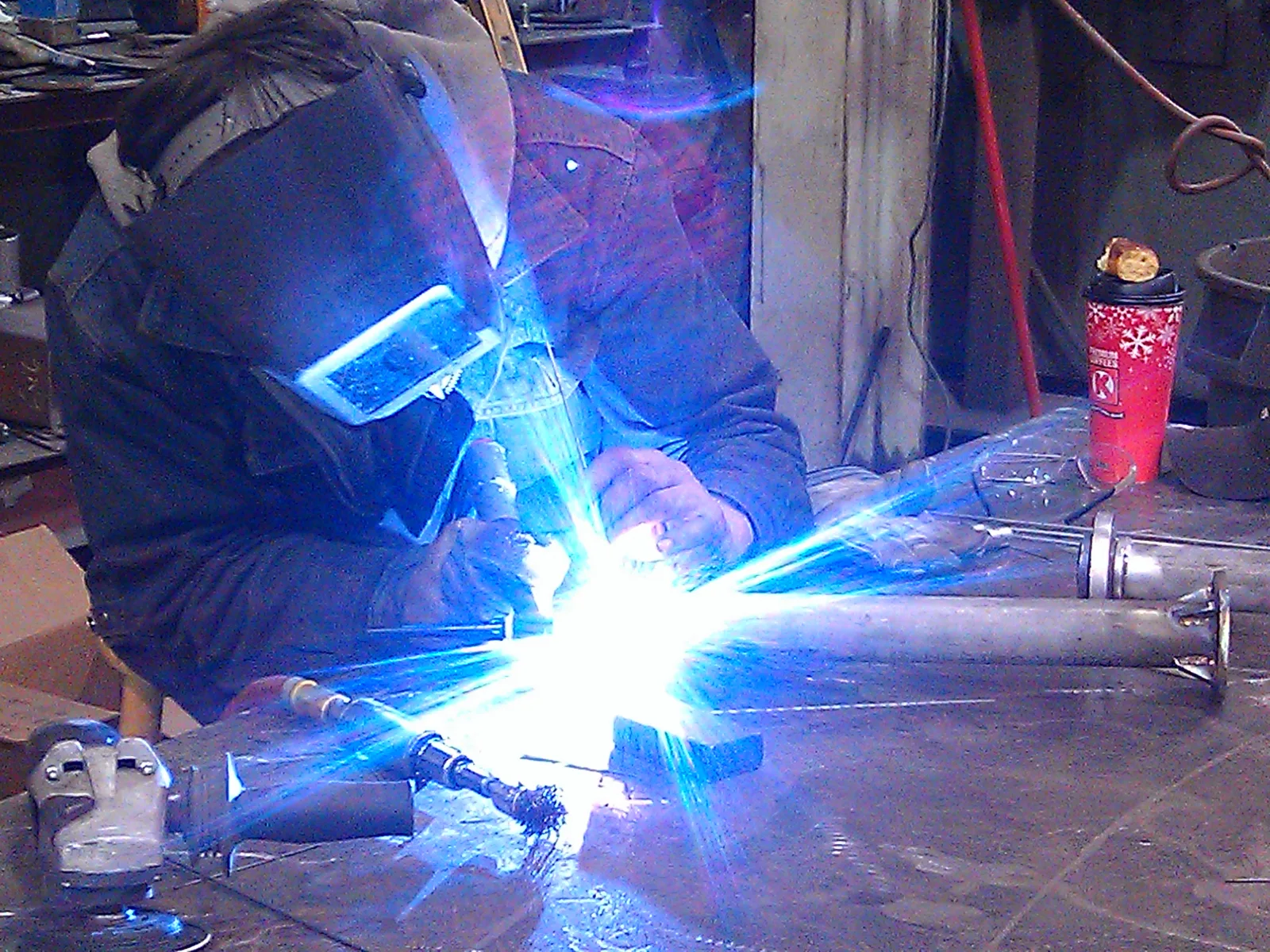
A welder joins two pieces of metal. A fabricator reads the print, works out how the assembly goes together, and builds it. Ask whether the people on your job are fabricators, and whether their certifications are current. Ours are certified across carbon steel, stainless and aluminum and retested on a regular schedule.
3. How do you check quality during the build?
A defect found at final inspection can mean cutting apart a finished weldment. Found during the build, it means fixing one joint. Ask when inspection happens, not only whether it does.
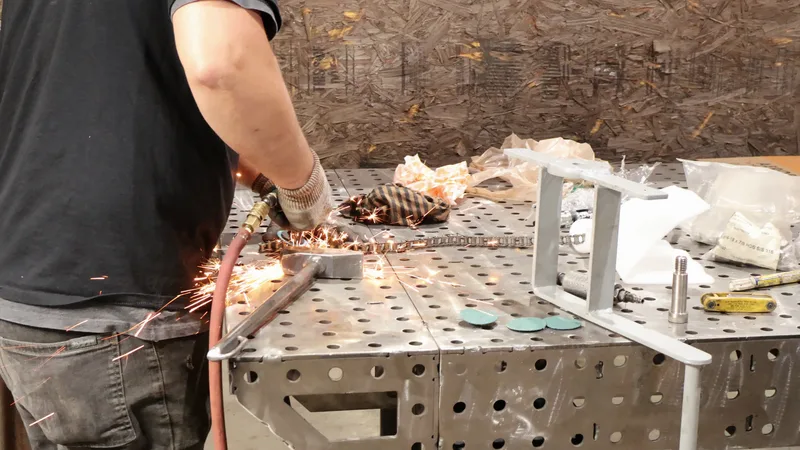
On our floor, all incoming material is inspected and stock is cut from a written cut list. Each fabricator checks their own work against an in-process quality sheet, then our quality control manager inspects the part before it moves to the next step. On a weld, that means:
- Spatter and over-grinding on the surface
- Undercut, underfill, porosity and cracks in the weld itself
- Weld size, neither oversized nor undersized
- Dimensions and quantities, checked against the print
The part then gets a green tag or a red tag: pass or fail. More on our quality and compliance page.
4. What will you send to another shop?
Every time a project changes hands, risk goes up. Each outside shop adds cost and a process you cannot see: a fabricator can inspect what comes back from a subcontractor, but not how that subcontractor runs its floor. Ask for a plain list of what goes out. At HPS, engineering, cutting, forming, welding, machining and finishing and coating can all stay inside our own organization, across our two Michigan facilities.
5. Can you engineer it, or only build to print?
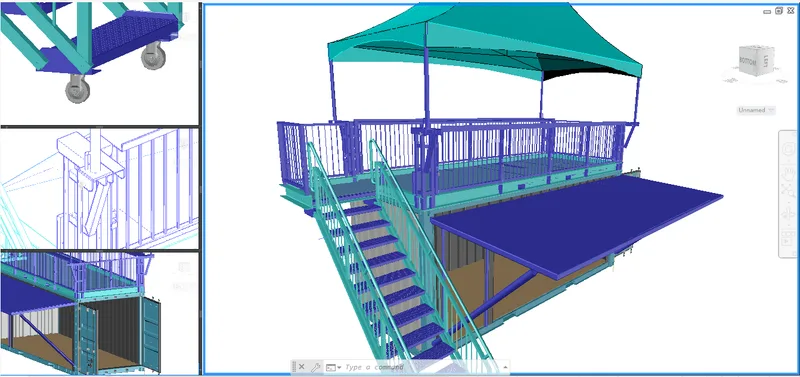
More design work is being pushed down to suppliers, and a build-to-print shop will build exactly the drawing you send, faults included. We have licensed professional engineers on staff, and ENCO Engineering, our engineering division, dates to 1985. See design-build engineering, and design-build vs build-to-print for who carries the design risk in each.
6. Can your shop physically handle my part?
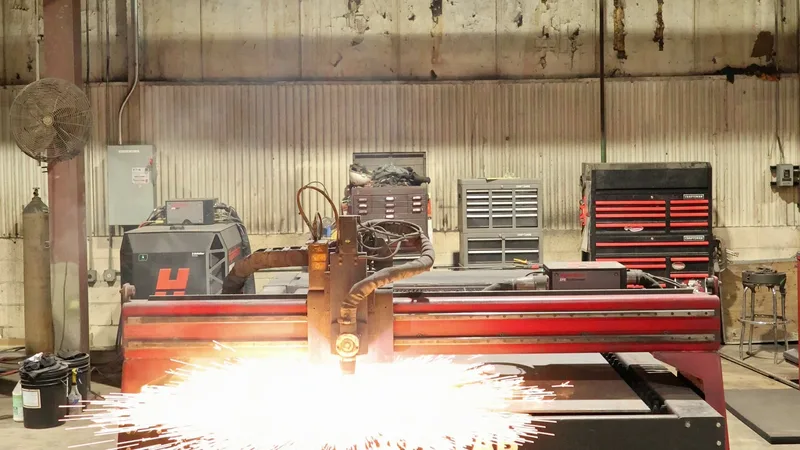
“We can do anything” is not an answer. Ask for materials, thickness and the largest thing the shop has built. Ours: carbon steel, stainless, aluminum and alloys, cut from 16 gauge to 2.5 inches, the top end on our plasma table, and heavier sections built up from welded plate. Structural steel is assembled on fixture tables we built ourselves, in a bay roughly 100 feet long under a gantry crane. Our largest salt bath system is as long as that bay, so we built it in segments. Higher-volume production runs at our Madison Heights facility, which has robotic welding.
7. Why is your quote lower?
The cheapest quote is rarely the cheapest job. Usually it is the one that left the most out: the engineering, the inspection, the finishing, or a date the shop can actually hit. Ask what is included, line by line.
Ask to see similar work
Ask what the shop has built that looks like your job in kind and size. Ours includes submarine ventilation hatch houses for the US Navy, redesigned through years of engineering changes, and handrail for Ford Field and Comerica Park. HPS has been fabricating since 1995. Defense buyers can start at our defense page.
Put the same questions to us
Any competent shop should answer all seven. Request a quote with your drawing package, or describe what the part has to do, and we will answer the seven along with the price.
Common questions
How to Choose a Metal Fabricator: Seven Questions to Ask Before You Send the PO: questions buyers ask
Should I just take the lowest quote?
Sometimes. If the drawing is proven, the part is simple and the shop answers the other questions well, the lowest quote may be right. When it is lower because it leaves something out, it rarely is.
What certifications should a fabricator have?
That depends on your part and your contract. Ask which certifications the shop holds against your specific requirement, and get the answer in writing. Our welders and fabricators are certified and retested on a regular schedule. Call 734-282-2285 and we will confirm the rest in writing.
What should I send to get a useful quote?
A drawing package if you have one, in DXF, DWG, STEP, IGES or PDF. If not, describe what the part has to do, the material, the quantity and when you need it.