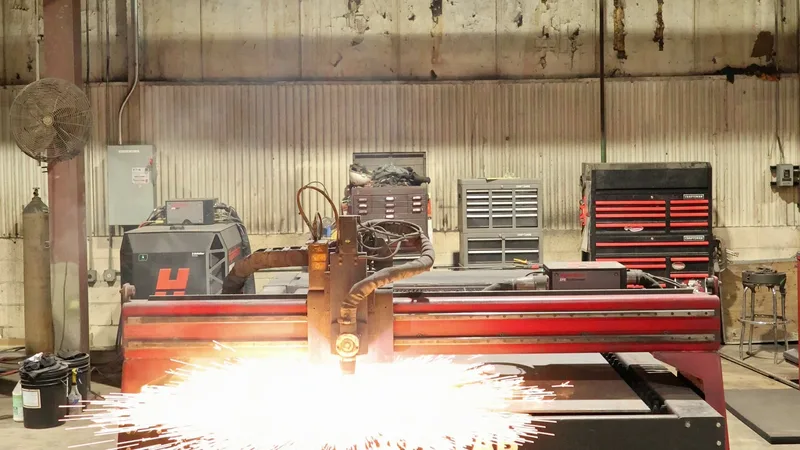


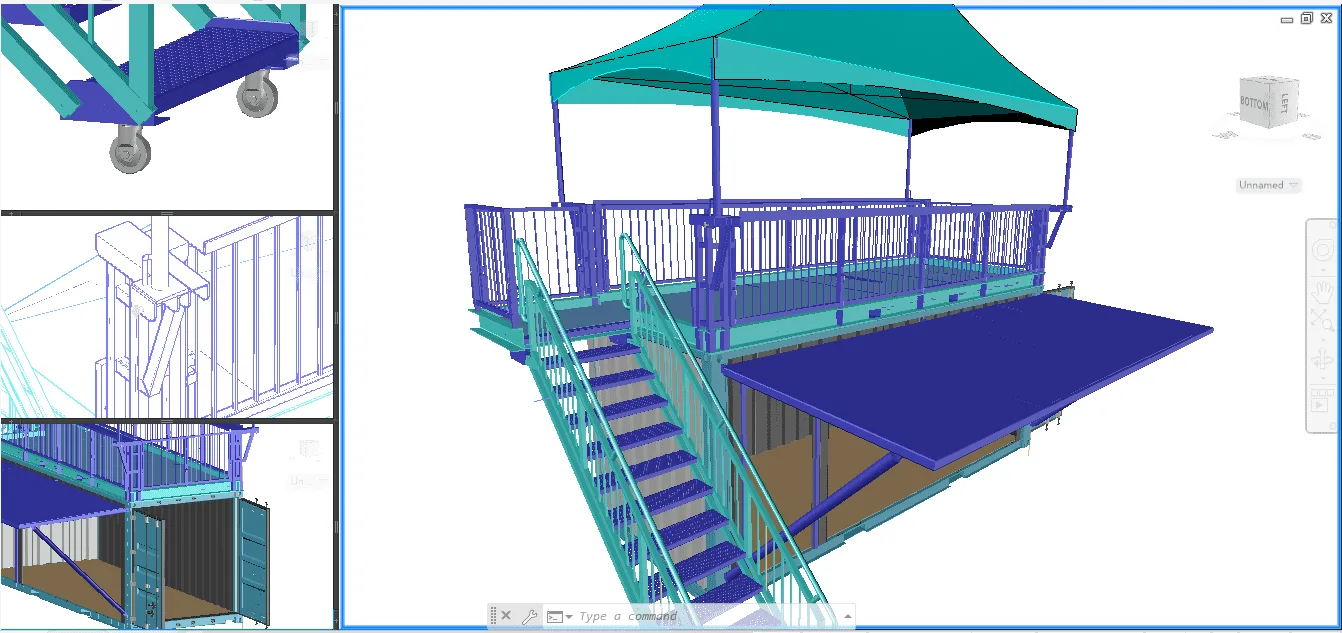

Build-to-print means you supply the drawings and the fabricator supplies the parts. Design-build means you supply the goal and the fabricator engineers the solution. The distinction decides who carries the design risk, and most buyers discover which one they chose at the worst possible moment.
Which one you should be buying
1. Build-to-print
You own the design. If the drawing is right you get the right part. If it is wrong, you get exactly the wrong part you specified, on time and to the letter.
Right when the design is mature and has been built before, you have in-house engineering that owns it, the part is simple, or you are dual-sourcing and need identical parts from two suppliers.
Also right when the design is regulated and cannot be altered without requalification.
The cost is that design risk stays with you, and it usually surfaces at assembly. Paying for engineering you do not need is waste. Send the print.
2. Design-build
You own the requirement. The fabricator engineers a solution and builds it.
Right when you know what the equipment must achieve but not what it looks like, the design is safety-critical and needs analysis rather than judgement, or an existing design is not working and needs re-engineering rather than re-manufacturing.
Also right when the assembly is large or complex enough that constructability is a real question, or you want one supplier accountable for the result.
The cost is that you are buying engineering as part of the job. The return is that a fault is found in review rather than at assembly.
Two fabricators quote the same job. One comes back noticeably cheaper. The cheaper one is quoting build-to-print and the other is quoting design-build, and nothing on either quotation says so.
That is the situation this article exists to prevent.
Who carries the design risk
This is the whole thing, and it is rarely stated on either quote. Under build-to-print, design risk is yours. A fabricator working to your print has no obligation to notice that a weld is in a bad place, that the load case was optimistic, or that the assembly cannot be built in the order the drawing implies. Some good ones will flag it. They are not paid to.
Under design-build, design risk sits with the fabricator, because they produced the design.
Neither is wrong. What is wrong is thinking you bought the second and actually buying the first, which is what happens when the quotes are compared on price alone.
Nobody to argue with
On a design-build job there is nobody to argue with about whether the drawing or the fabrication was at fault, because one organization did both. That is worth more than it sounds on the day something does not fit.
The failure mode nobody quotes for
Here is how build-to-print goes wrong in practice, and it is almost never the fabricator’s doing. A drawing package is issued, quoted and made correctly. During assembly a weld turns out to be unreachable with a torch, or two components interfere by a sixteenth of an inch, or a bolt cannot be tightened because there is no room for a wrench.
Now you are holding correct parts that do not go together. The fabricator built what you specified and is entitled to be paid. The rework, the schedule slip and the second run of parts are all yours. A design-build supplier catches that class of problem during design, because the people who will weld the assembly are consulted while the drawing is still a drawing.
The engineering nobody is doing any more
There is a structural reason this keeps coming up. Engineering headcount left a great many OEMs over the past two decades and never came back. Value analysis and design work that used to happen at the customer got pushed down the supply chain, and the work did not disappear with it: it moved to whoever could absorb it.
If your supplier cannot absorb it, you are absorbing it, whether or not that was the plan. A purchasing group specifying equipment it does not have the engineers to fully analyse is buying build-to-print and hoping for design-build.
Every handoff is a place to lose the job
Design-build tends to reduce the number of companies involved, which matters more than it sounds. A typical fabricated assembly can pass through an engineering consultancy, a cutting house, a weld shop, a machine shop and a coater. Five companies, five schedules, five readings of the same drawing, and no single party accountable for the finished equipment.
Every outside supplier adds cost, and each one is a shop whose internal process you cannot see. Incoming material can be inspected; another company’s judgement cannot. Every time a project changes hands, risk goes up.
What design-build looks like when it works
Two examples from our own work.
The US Navy submarine ventilation hatch houses started as a stopgap product never designed for the job it ended up doing, and were re-engineered through successive changes into something purpose-fit. That only happens when engineering changes are cheap, and they are only cheap when the engineer and the fabricator work in the same building.
The molten salt bath systems are the same lesson told over thirty years. Hundreds of units, no two processes identical, each one engineered around a temperature, a throughput and a footprint rather than built from a drawing somebody else produced. A build-to-print shop can make one of those if you hand it a finished design. It cannot tell you what the design should be.
How to tell which one you are buying
In-house draughting is not the same as a licensed professional engineer who can stamp an analysis, and every subcontracted operation is a handoff and a schedule you do not control. Ask about both before comparing prices.
The cheapest quote is rarely the cheapest job. Usually it is the quote that included the least.
Where to go from here
If you have a complete, proven drawing package, send it and buy build-to-print, from us or from anyone competent. If you have a requirement rather than a drawing, or a design that is not performing, that is design-build engineering, and it is what our licensed professional engineers are for.
Common questions
Design-Build vs Build-to-Print: questions buyers ask
What is the actual difference?
Build-to-print means you supply a finished, correct drawing package and the shop makes exactly that. Design-build means you can arrive with a performance requirement instead, and the engineering is part of the job. HPS does both.
Is design-build more expensive?
Not usually, once you count the engineering you would otherwise buy separately and the cost of a fault found at assembly rather than in review. The cheapest quote is rarely the cheapest job.
What do you need from me to start?
The load, the rate, the envelope and the environment. That is enough to begin, and it is far less than a drawing package.
Do you actually have engineers on staff?
Licensed professional engineers, in mechanical, electrical and structural disciplines. ENCO Engineering has been the in-house engineering division since 1985. Nothing about the design work is subcontracted.
Can I still just send you prints?
Yes. Plenty of our work is straight build-to-print, and we are happy to quote it that way.