
Industrial
Molten Salt Bath Systems
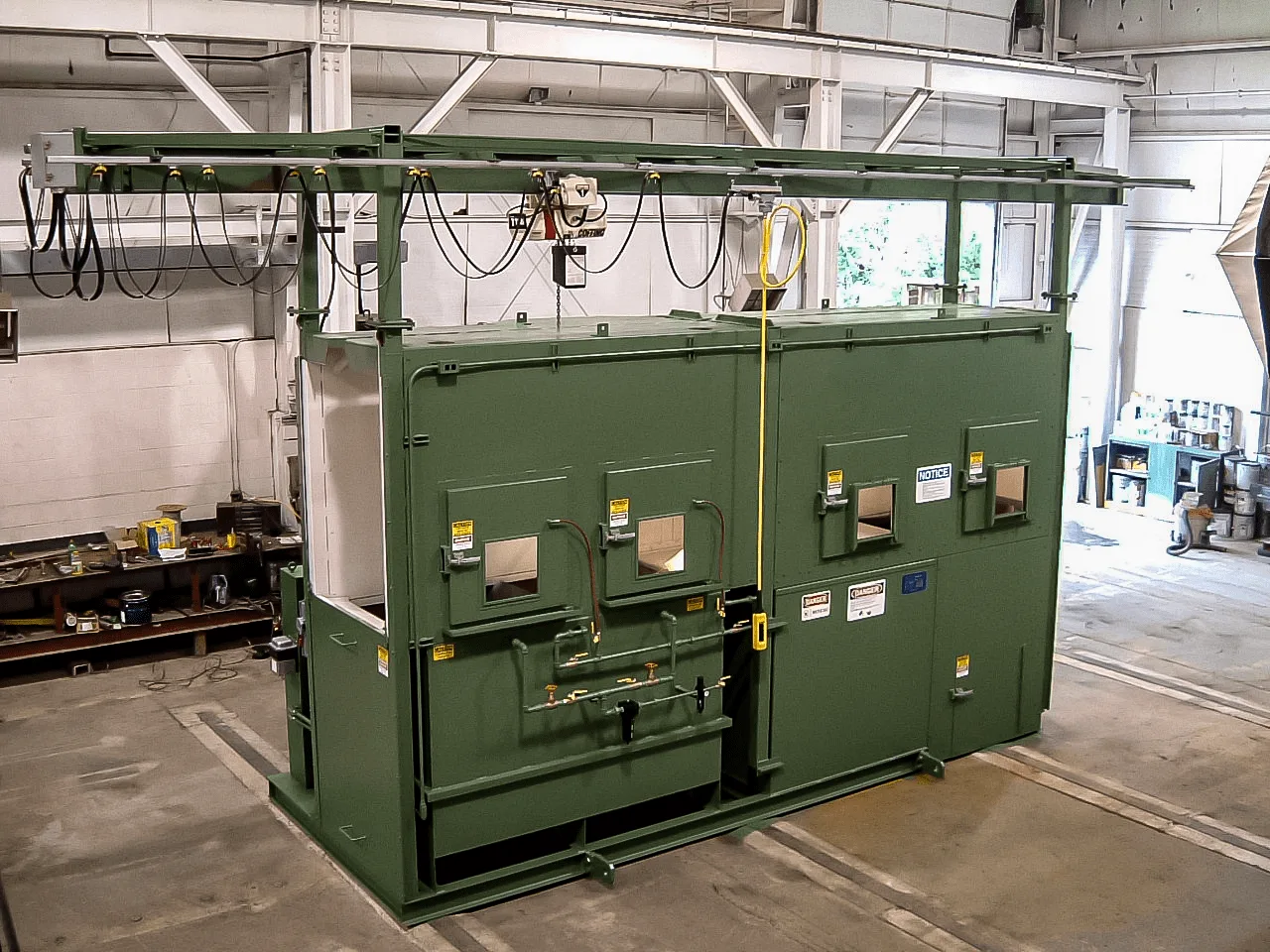
HPS Fabrications has been building molten salt bath systems for around thirty years, hundreds of units, each engineered around a customer's own heat-treating process. The largest is a continuous system 100 feet long and 20 feet on each side, fabricated in segments over three and a half to four months and engineered to align when assembled.
| Sector | Industrial |
|---|---|
| Outcome | Hundreds delivered; largest 100 ft x 20 ft x 20 ft |
Thirty years of them, and one that was different
A salt bath is a heat-treating process: parts are immersed in molten salt to achieve metallurgical properties that other methods cannot reach as uniformly.
We have been building them for around thirty years, hundreds of units. Every customer’s process is different, so the work is an engineering job each time rather than a catalogue order: a temperature, a throughput, a part size and a plant footprint, turned into equipment.
The largest is the one worth describing. A continuous system, 100 feet long and 20 feet on each side, built in segments over three and a half to four months. At that scale the equipment stops being a machine you install and becomes a structure you build, hot and corrosive on the inside for its whole service life.
Why segmenting is an engineering decision
Nothing 100 feet long ships on a truck. So the system is designed from the outset as segments that go together on site.
That moves the difficulty upstream. Every segment interface has to be engineered so that sections fabricated weeks apart line up on a customer’s floor, where there is no room to adjust and the schedule is already committed.
Which means:
- Interfaces engineered, not fitted: alignment designed in, not corrected during install
- Fixturing that holds across months: the fixture used for segment one is the fixture used for segment eight
- Dimensional control throughout: not verified at the end
We design and build our own fixture tables, which is what makes consistency across a months-long build achievable. Assembly happens in a bay roughly 100 feet long under a gantry crane: long enough to see whether the thing is actually straight.
Molten salt is an unforgiving environment
The design problem is not only the size.
Thermal expansion over 100 feet of structure is substantial and has to be accommodated rather than resisted. Material selection has to survive the chemistry. And the whole assembly cycles between ambient and process temperature repeatedly, which is a fatigue question.
That is analysis work: thermal behaviour, structural loads, material selection, and it happens before fabrication, through our licensed professional engineers. See design-build engineering.
How it was built
Plate cut on our own CNC plasma table. Structural fabrication and welding by certified fabricators with welds inspected in process. Coated in our own paint booth.
Three and a half to four months from start to delivery: a realistic schedule, quoted from real supplier lead times and real labor hours.
Similar work
Industrial furnace equipment, conveyor systems, RDF feed equipment and clarifier systems. More on industrial fabrication, or see shiploading systems for another segmented build.
In the shop and on site
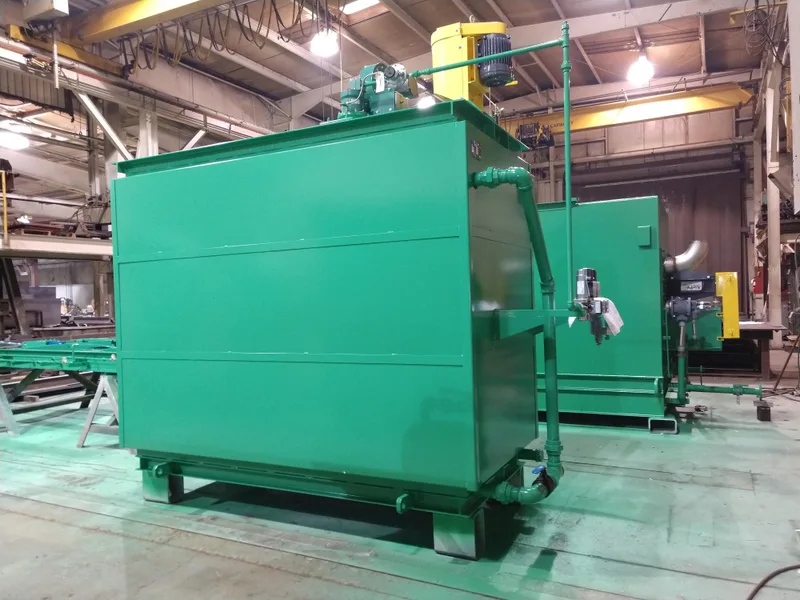
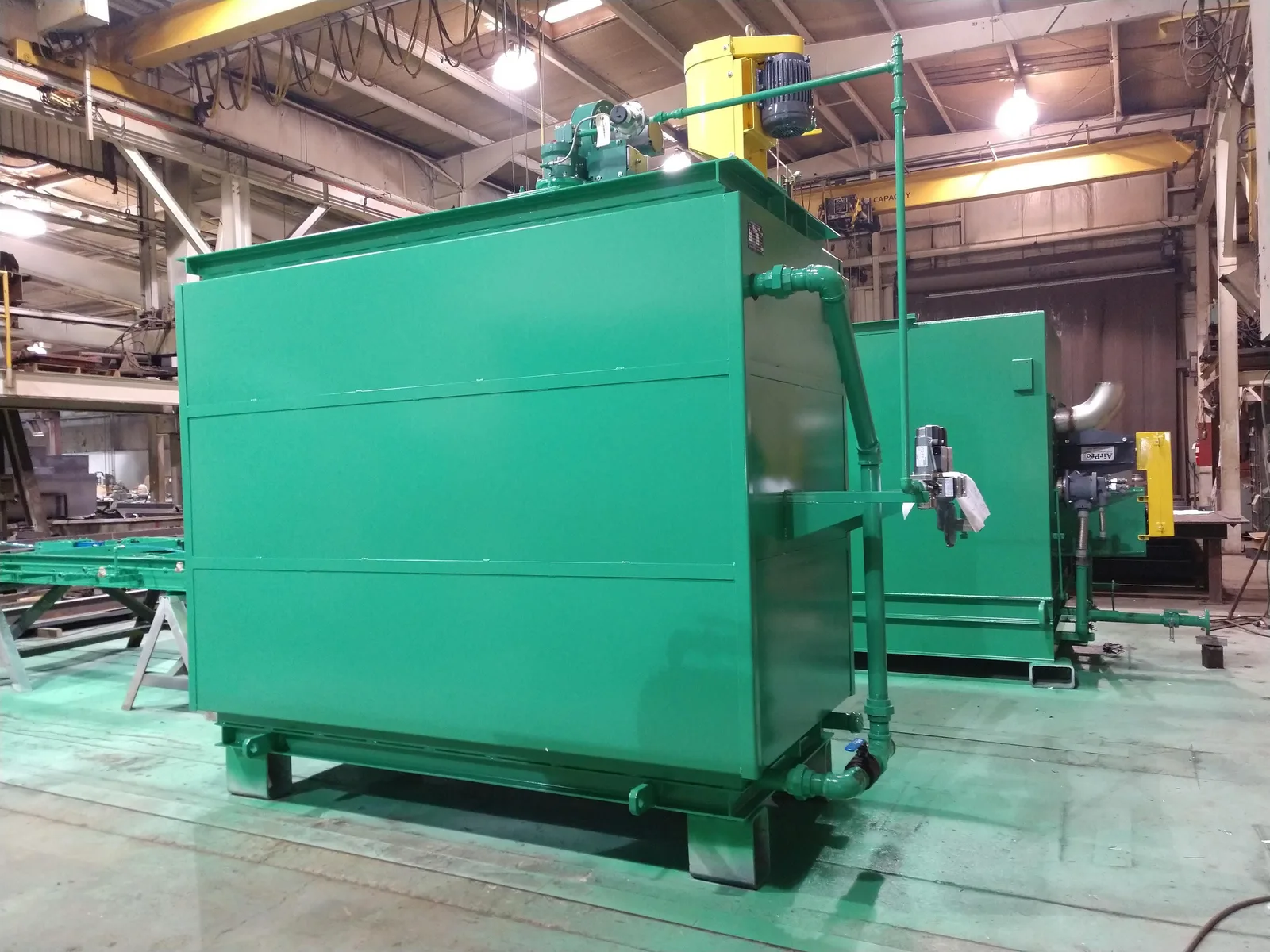
Heated process tank 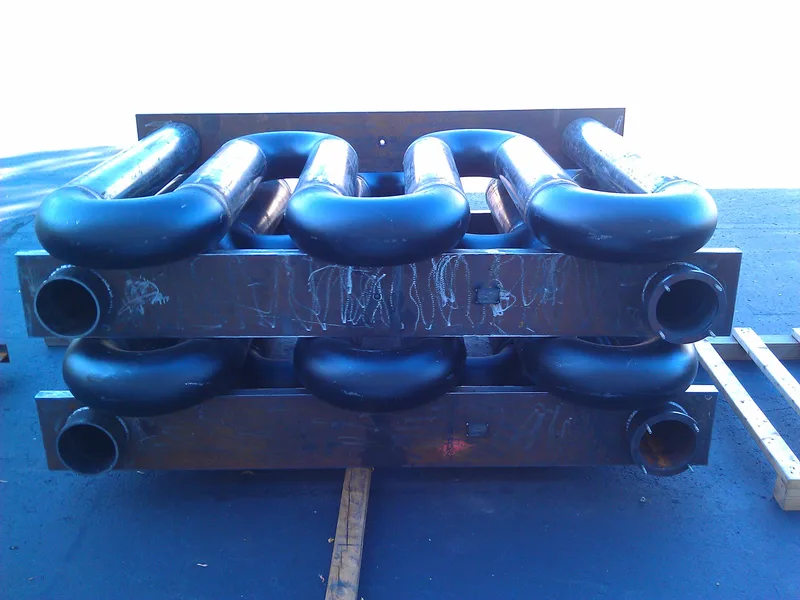
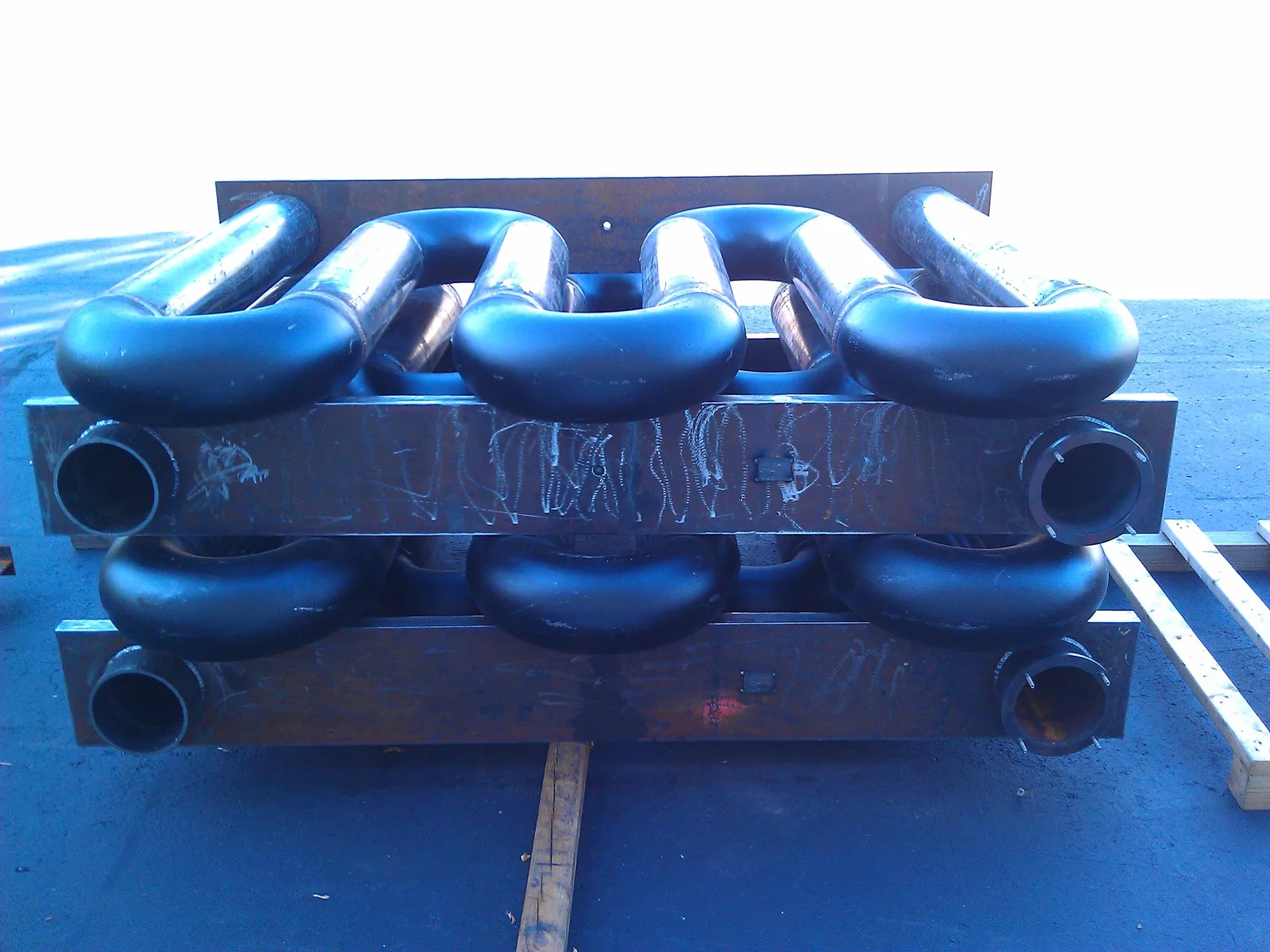
Immersion burner tubes 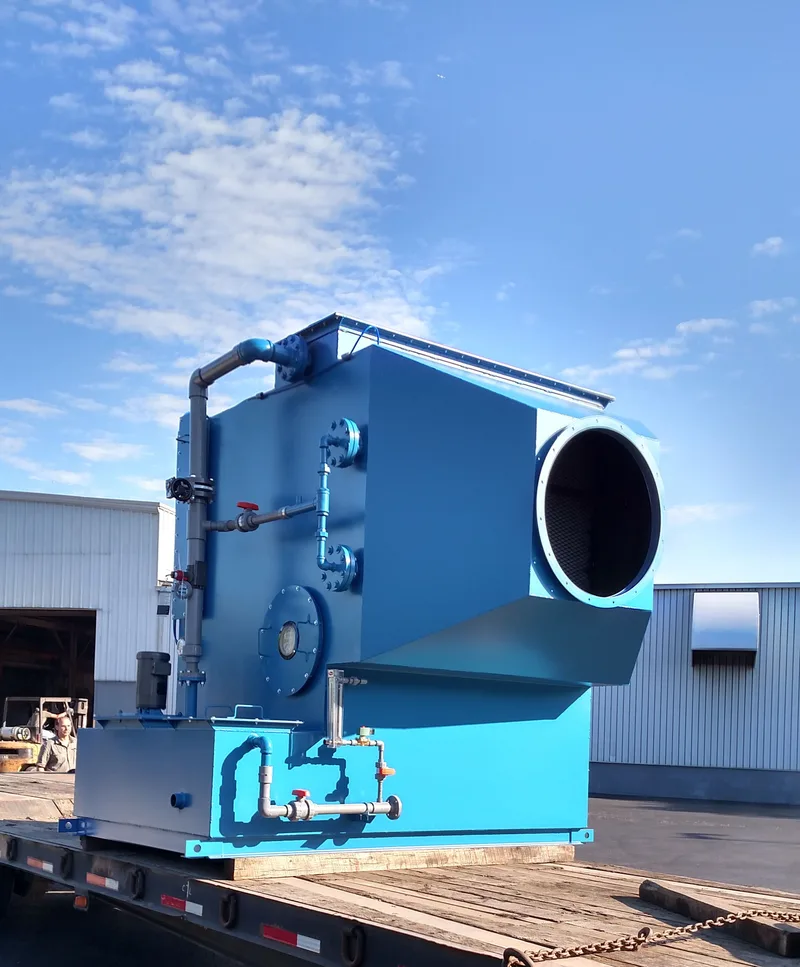
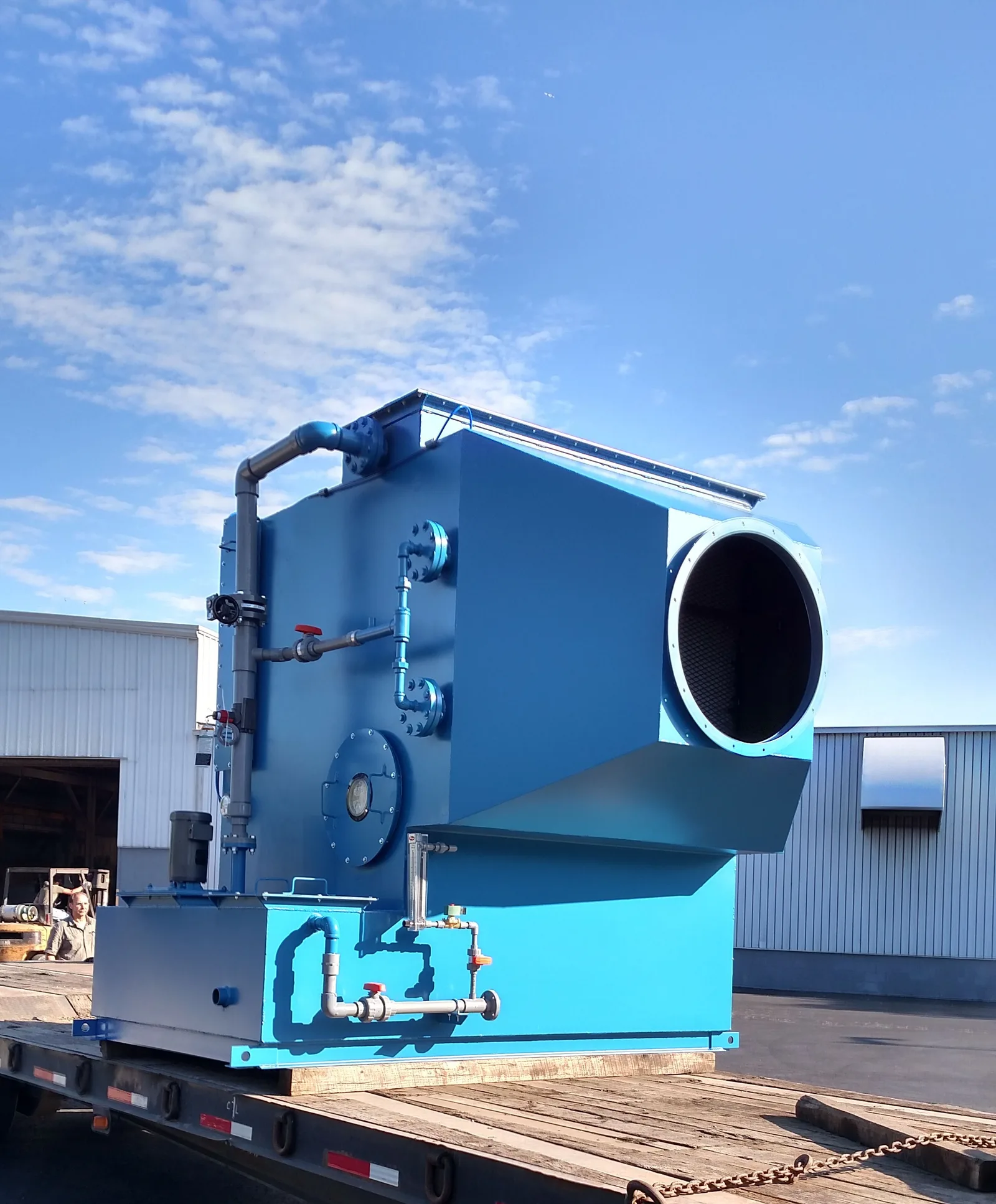
Fume scrubber
Common questions
Molten Salt Bath Systems: questions buyers ask
How many of these have you built?
Hundreds, over roughly thirty years. Salt bath work is a standing line for us rather than a one-off, and no two customers' processes are quite the same, so each one is engineered rather than picked from a catalogue.
How do you build something 100 feet long?
In segments, engineered so they align when assembled. The largest we have built is a continuous system 100 feet long and 20 feet on each side, and it took three and a half to four months.
Does the segmenting cause fit-up problems on site?
It is the main risk, and it is an engineering problem before it is a welding one. The segments are designed to align, by the same engineers who are in the building where they get built.
Can you do the same for our process equipment?
Tell us the size, the duty and the site constraints. Industrial furnace equipment, conveyor systems and process equipment are regular work here.
Talk to us about a industrial project.
Send a print or describe the problem. Either works.
Request a Quote