
Bulk material handling
Shiploading Systems
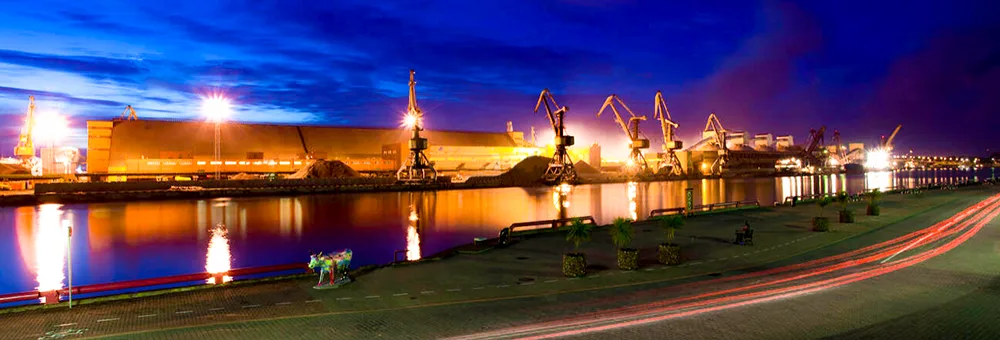
HPS Fabrications, through our ENCO engineering division, engineers and builds shiploading stations and port equipment. ENCO added a team dedicated to port facilities and shiploaders in 1990, and the work includes one of the largest shiploading stations in the world, in Latvia.
| Sector | Bulk material handling |
|---|---|
| Outcome | One of the largest shiploading stations in the world |
One of the largest shiploading stations in the world
In Latvia. Engineered by ENCO, our in-house engineering division.
That is an unusual sentence for a Michigan fabricator, and the explanation is thirty-five years of deliberate specialisation. ENCO has solved structural problems since 1985. In 1990 it added a team focused specifically on port facilities, shiploaders and related bulk material handling systems. ENCO’s work spans design, engineering, detailing and commissioning, on projects from national sports stadiums to bulk handling installations, in the United States and abroad.
Why shiploaders are an engineering problem first
A shiploader moves enormous quantities of bulk material continuously, outdoors, over water, into a vessel that is moving and changing draft as it fills.
The design cases stack up:
- Dynamic loads: not a static mass: material in motion, and a boom that moves with it
- Wind loads on a very large exposed structure
- Abrasion from the material passing through it, over decades
- Fatigue from continuous duty
- Marine corrosion: permanently
None of that is resolved by fabricating a drawing well. It is resolved by analysis before fabrication: mechanical, electrical and structural engineering, CAD modeling, simulation and finite element analysis. All of it in house. See design-build engineering.
ENCO’s port team also covers pumps, compressors and turbines, power distribution, and control systems and instrumentation: a shiploader is a machine, not just a structure.
Built in segments, aligned on site
Port equipment cannot be shipped whole. It is fabricated in segments engineered to align when they are joined at the port, which puts the accuracy burden on the fixturing and the engineering rather than on the installers.
Assembly happens in a bay roughly 100 feet long under a gantry crane. Plate is cut on our own CNC plasma table, fabricated and welded by certified fabricators, and coated in house, which for salt-air service is not a cosmetic step.
We provide field support through installation and commissioning.
The wider line of work
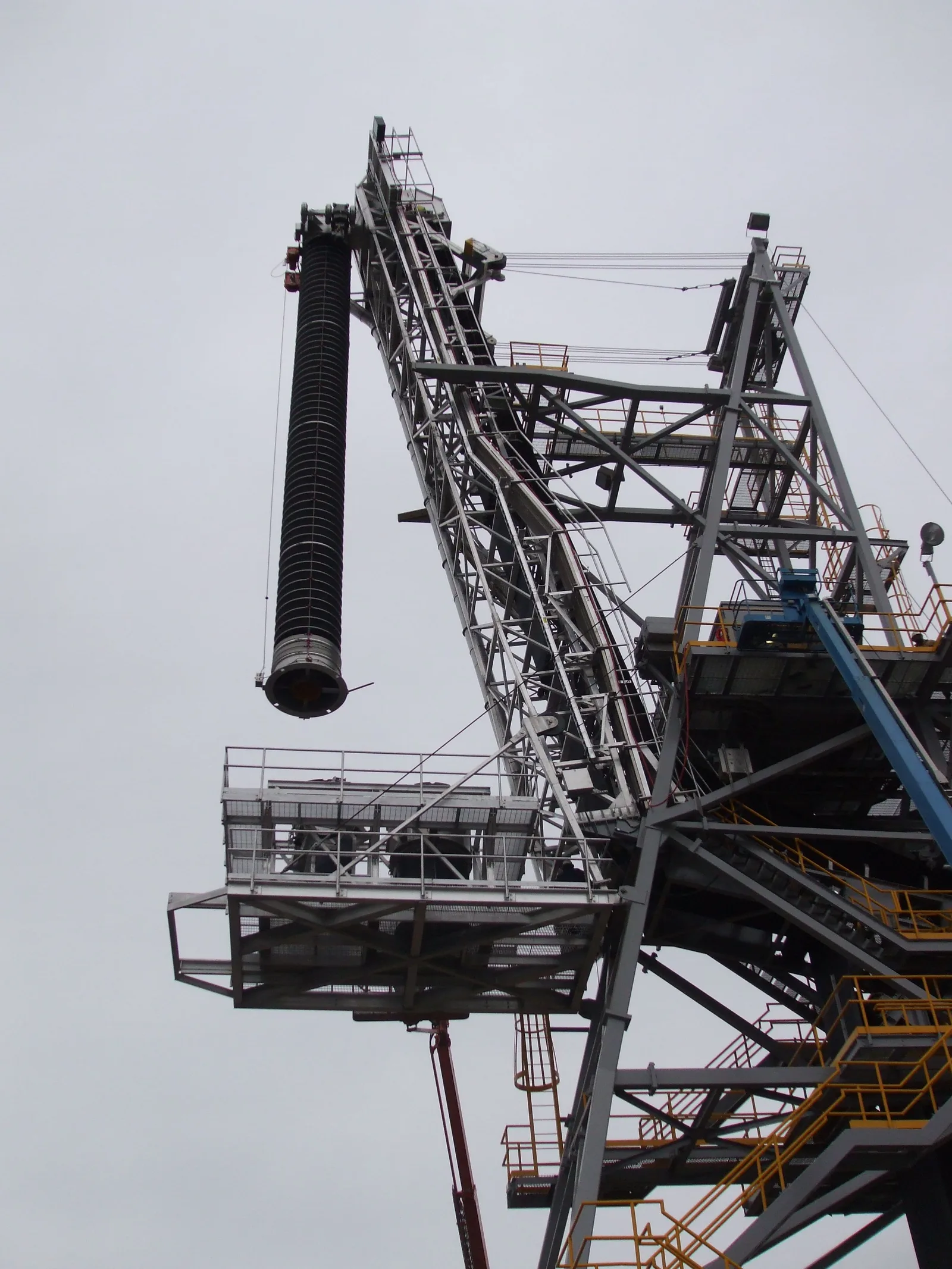
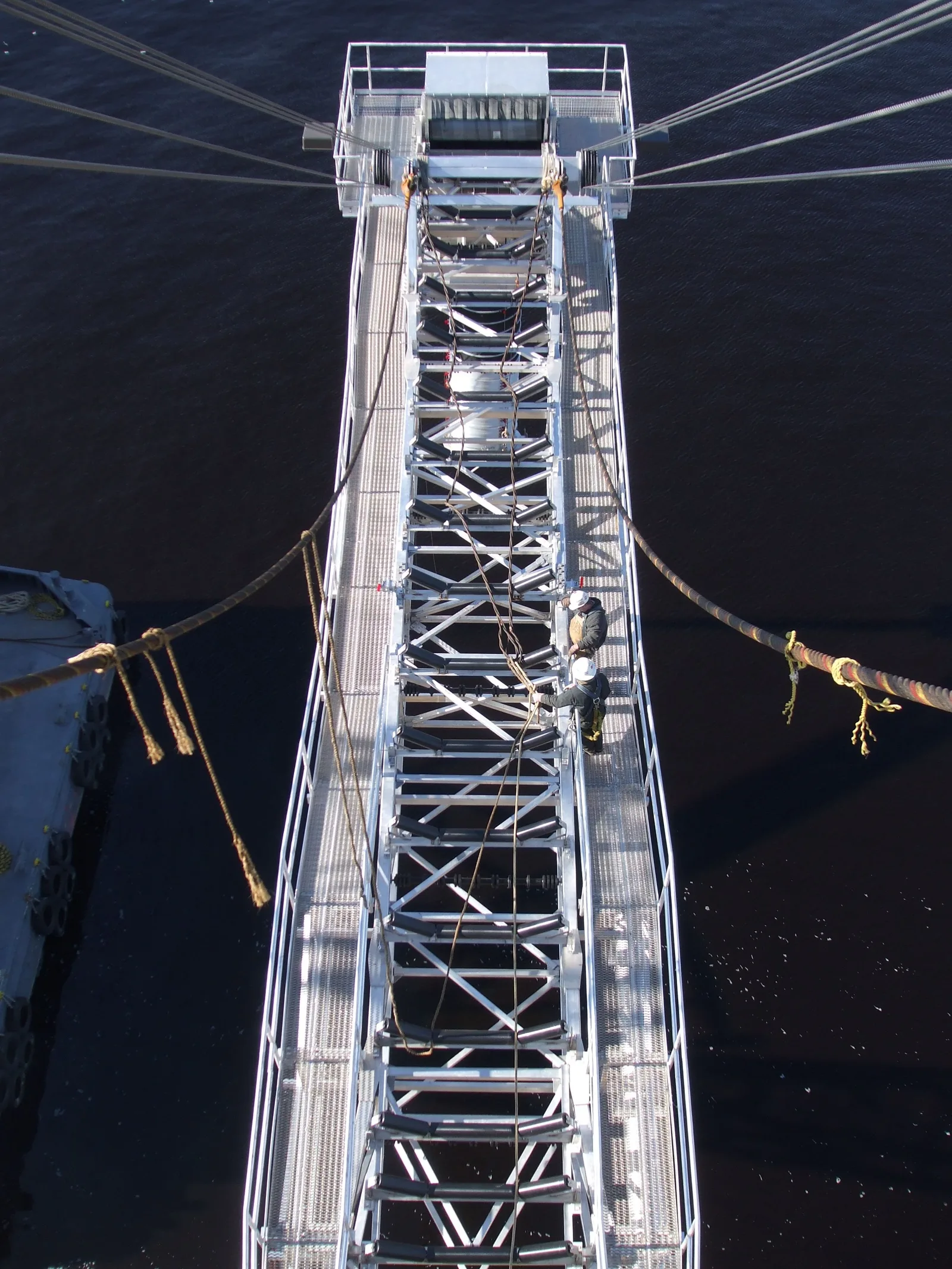
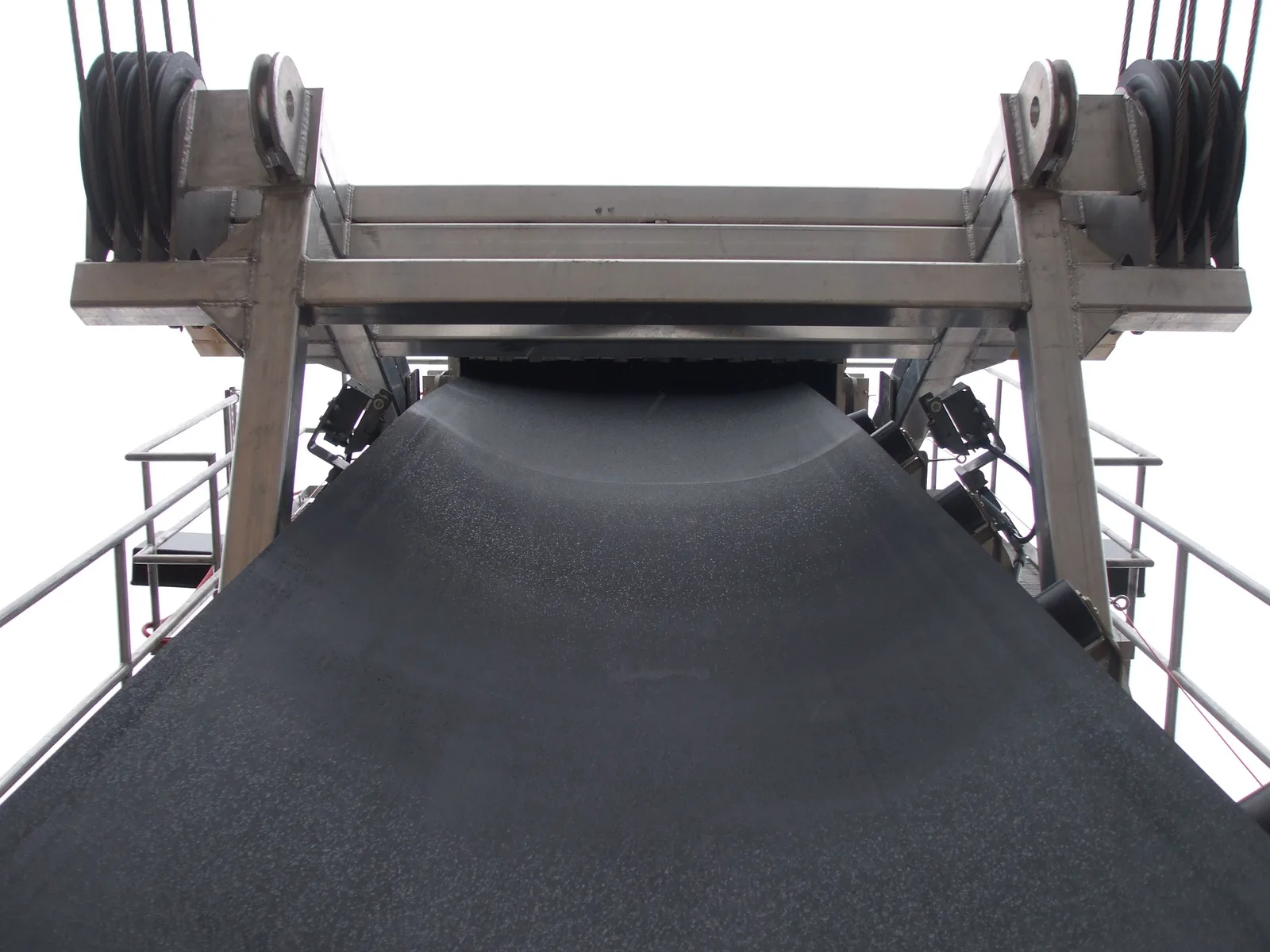
Brows, bridges and gangways, including US Navy brows. Boom and spout platforms. Conveyor systems and belt conveyor components. RDF feed equipment.
More on bulk material handling, or see the molten salt bath systems for another segmented, over-100-foot build.
In the shop and on site
Common questions
Shiploading Systems: questions buyers ask
How large a shiploader have you built?
HPS and ENCO engineered and built one of the largest shiploading stations in the world, in Latvia.
How long have you done port equipment?
ENCO added port and shiploader engineering in 1990 and has been the in-house engineering division since 1985.
Can you handle installation overseas?
The lifecycle we cover runs concept, design, fabrication, assembly and installation, with field support. Tell us the site and we will tell you straight what we can and cannot do.
Talk to us about a bulk material handling project.
Send a print or describe the problem. Either works.
Request a Quote