
Capability
CNC Plasma Cutting
HPS Fabrications runs CNC plasma cutting on a Koike Aronson Plate-Fab table, in carbon steel, stainless and aluminum, on plate up to 2.5 inches thick. Plasma is the fast, economical choice on heavier plate where edge finish matters less than throughput. Send a drawing and we will tell you if it suits your part.
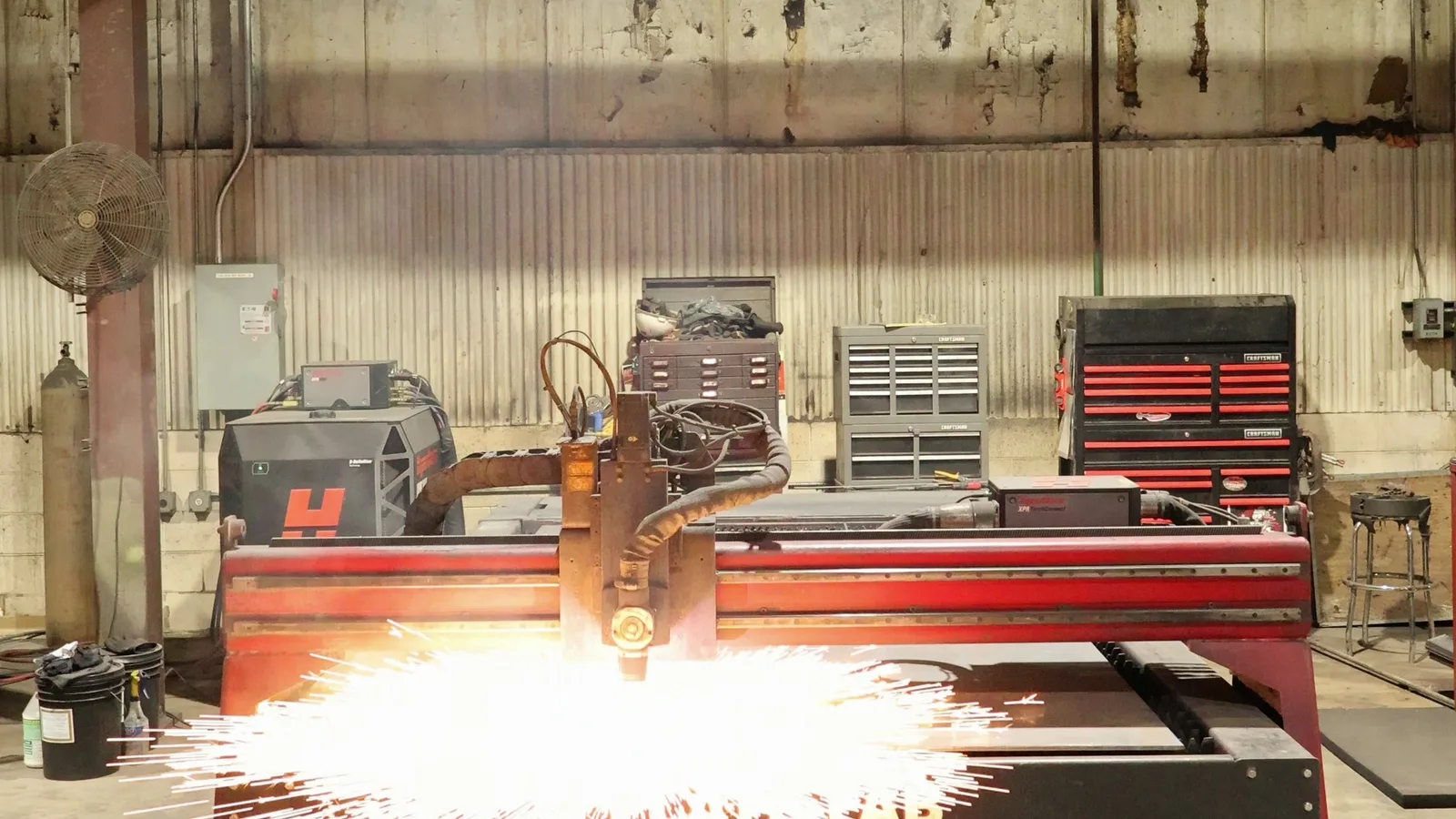
| Equipment | Koike Aronson Plate-Fab CNC plasma table |
|---|---|
| Materials | Carbon steel, stainless steel, aluminum |
| Plasma cutting thickness | Up to 2.5 inches |
| Typical use | Plate, structural components, weldment parts, nested profiles |
Fast and economical on plate
CNC plasma is the workhorse for heavier material. On structural plate it cuts faster and at lower cost than laser or waterjet, and for the great majority of structural parts its edge quality is more than enough, particularly when the edge is about to be welded anyway.
We cut on a Koike Aronson Plate-Fab table. Parts are nested to get the most out of each plate, which shows up in the price of the job rather than in a line item.
When to pick something else
Plasma leaves a wider kerf and more of a heat-affected zone than the other two processes.
- If the profile is intricate or holes must be positioned precisely relative to each other, use laser
- If the cut edge must be metallurgically unchanged, use waterjet
- If it is structural plate heading for a weld fixture, plasma is almost always right
Running all three in house means this is a genuine recommendation rather than a pitch for the machine we own.
Cutting is the first operation
Most plasma-cut plate here does not ship as plate. It gets formed, fitted on our own fixture tables, welded by certified fabricators, machined where needed, and coated in our paint booth.
Large structures are assembled under roughly 100 feet of bay length with a gantry crane, which is how equipment like the molten salt bath systems, over 100 feet long and 20 feet on each side, gets built in segments.
What to send
DXF or STEP is ideal; DWG, IGES and PDF work. Include material, thickness and quantity, and say whether you want cut parts or a finished assembly.
Common questions
CNC Plasma Cutting: questions buyers ask
When is plasma the right choice over laser?
On heavier plate, and on parts where the cut edge is going to be welded anyway. Plasma is fast and it is the cheapest of our three processes on heavy sections. Spending laser money on an edge that disappears into a weld is money you do not get back.
Is the edge quality good enough?
For most structural and weldment work, yes. Plasma leaves a wider kerf and a rougher edge than laser or waterjet. Where the edge is visible or has to be accurate, we will tell you to use a different process, or we will clean it up downstream.
What materials and thicknesses?
Carbon steel, stainless steel, aluminum and alloys. The plasma table cuts plate up to 2.5 inches thick. Fabricated assemblies can be much heavier than that, because thick sections are built up from plate.
Do you do the welding as well?
Yes. Certified welders and fabricators work in carbon steel, stainless and aluminum, and are retested on a regular schedule. Weld inspection happens in process rather than only at the end.
How big a part can you handle?
The main bay in Wyandotte runs roughly 100 feet under a gantry crane. Past work includes a salt bath system over 100 feet long and 20 feet on each side, built in segments and engineered to align on assembly.