
Capability
Rapid Prototyping
HPS Fabrications does rapid prototyping for defense and government buyers who have a problem and need a working solution. Our licensed engineers design it and our shop builds the prototype. It arrives ready to be evaluated, and ready to become a production part if it wins.
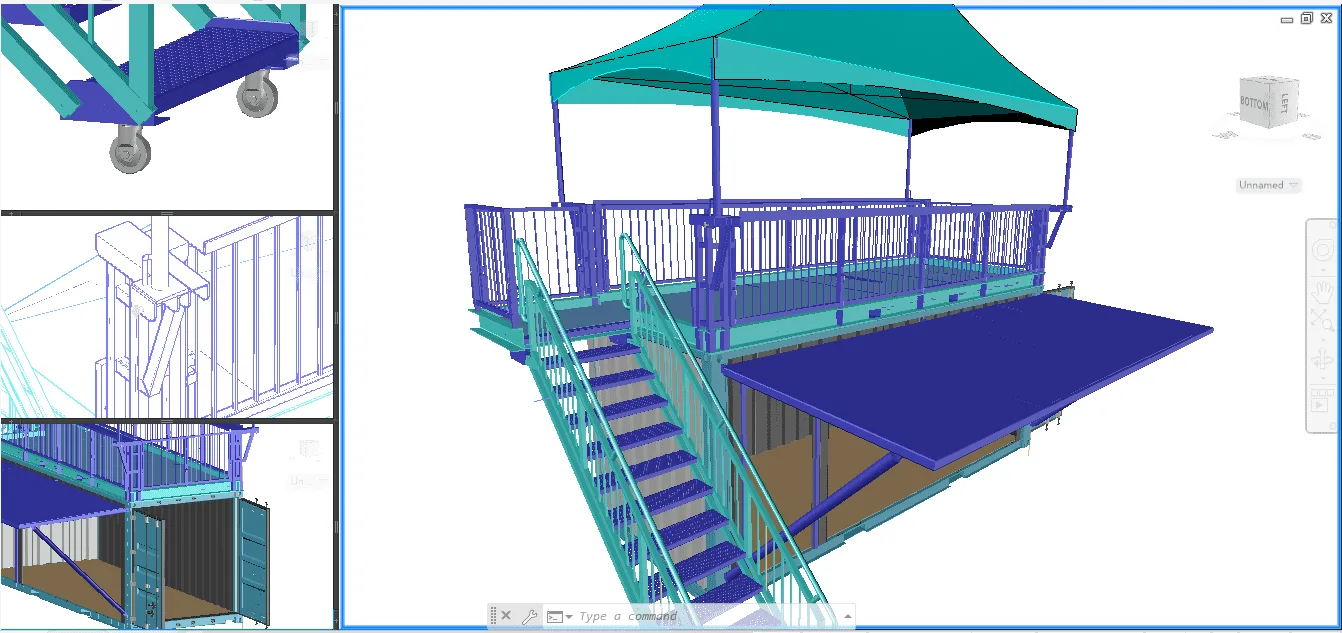
| Starting point | A problem statement, a sketch, a drawing package or an RFQ |
|---|---|
| Design | Licensed professional engineers, CAD modeling, simulation, FEA |
| Build | Cutting, forming, welding, machining and finishing in house |
| Materials | Carbon steel, stainless steel, aluminum, alloys |
A problem in, a working prototype out
The usual request looks like this: a buyer has a problem, often one that turns up at many bases at once, and needs a solution. Nobody has a drawing yet. There is only the problem.
We engineer a solution, build it, and deliver a prototype the buyer can put their hands on. The buyer usually pays for the prototype, then evaluates it against other bidders’ and picks the best product at the best price.
That is a competition decided on the hardware, not on the proposal. It favours a supplier whose engineers and fabricators work in the same company.
Why engineering and fabrication in one company matters here
A prototype is a fast series of decisions. Each one goes better when the engineer who made it can walk over to the welder and see what it means in steel.
- Our engineers design the solution, with CAD modeling, simulation and FEA, under licensed professional engineers
- Our shop builds it by cutting, forming, welding, machining and finishing, with nothing sent out
- Changes stay in the building. A revision is a conversation, not a new drawing package and a re-quote from a second firm
The prototype is the first production part
A prototype that wins becomes a production order. The fixtures, the process and the people that built it carry straight into the run, so the hundredth part matches the one that was evaluated. More on that in production and prototyping.
The Navy submarine ventilation hatch houses show the pattern. They began as a stopgap product and were redesigned through successive engineering changes into something built for the job.
What to send
The RFQ or statement of work if there is one. Otherwise, the problem in a paragraph, a photograph of what fails or what has to be replaced, and how many sites have the same problem. That last number changes the right answer more than anything else.
Common questions
Rapid Prototyping: questions buyers ask
What do you need from us to start?
The problem, stated plainly: what has to be supported, moved, protected or fixed, where, and by whom. A drawing helps but is not required. Our engineers can take it from a problem statement.
Do you respond to prototype RFQs?
Yes. Send the RFQ and the statement of work, and we will tell you plainly whether it suits us.
What happens after the prototype is accepted?
It can go straight into production here. The engineering, fixtures and process already exist, so a production order does not start again with a new supplier.
How is this different from your production and prototyping work?
That page covers building your design: first articles, then repeat runs. This page covers the step before it, where the design does not exist yet and we engineer the solution as well as building it.